Key Takeaways
- Planning your covered patio during the initial home design phase saves money and creates a natural flow from indoors to outdoors.
- Smart material choices and strategic shade placement protect your space from Columbia’s harsh sun and heavy humidity.
- Adding features like ceiling fans, infrared heaters, and retractable screens keeps your patio or porch comfortable across all four seasons.
Missouri weather rarely believes in moderation. One week brings 75 degrees and sunshine, and the next brings sideways rain, thick humidity, or an unexpected cold snap. Because of this, outdoor living in Mid-Missourirequires a different approach than the Pinterest-perfect backyards you see in California.
A well-designed covered patio does much more than look good. It creates a space you can actually use through our unpredictable seasons. The right layout protects you from heat, rain, wind, and pollen while keeping you comfortable and connected to your home. For those building custom homes in Columbia, outdoor living spaces are quickly becoming an essential extension of the house itself.
Why Covered Spaces Matter More in Missouri
We all know how frustrating it is to step outside onto a scorching hot patio slab. Without a roof, uncovered patios often become spaces you only look at from the window, rather than areas your family actually uses. A sturdy cover extends your usability throughout the entire year.
A well-planned roof structure shields you from the intense summer sun and sudden afternoon storms. It also keeps heavy spring pollen and falling autumn leaves off your seating areas. As a bonus, keeping the elements at bay helps preserve your outdoor furniture and finishes, saving you replacement costs down the road.
Beating the Columbia Heat and Humidity
Columbia summers are notoriously hot and heavy with moisture. If you want to enjoy your coffee outside in July, you need a plan for the heat.
The direction your patio faces plays a massive role in your comfort. West-facing patios take a brutal beating from the afternoon sun, meaning your covered depth needs to be substantial to cast enough shade. You also need to keep air moving. Think of ceiling fans as your patio’s best friend, constantly pushing away heavy, stagnant air so you can breathe easily.
We recommend choosing materials that can handle heavy moisture without warping or rotting:
- Flooring: Use slip-resistant stone or stamped concrete that withstands heavy rain and freezing temperatures.
- Wood: Select moisture-resistant composites or treated woods for decking and ceiling accents.
- Fabrics: Invest in durable outdoor fabrics that resist mold and fading.
Features That Keep You Comfortable Year-Round
Outdoor living has evolved far beyond a charcoal grill and a concrete slab. To make your patio a true living space, we can add features that match the comfort of your living room.
Consider adding these functional upgrades to your design:
- Heating: Install infrared heaters or a natural stone fireplace to keep the space warm during crisp fall evenings.
- Cooling: Mount high-powered ceiling fans to push heavy humidity out of your seating area.
- Entertainment: Wire the space for mounted televisions and built-in speaker systems for Mizzou game days.
- Protection: Add motorized retractable screens to keep mosquitoes out during humid summer nights.
Blending Your Indoor and Outdoor Rooms
The best outdoor living spaces feel like the house simply continues outward. You want your patio to feel intentional and integrated with the home.
We achieve this flow by installing large sliding glass doors that open the wall entirely. Matching your outdoor flooring color to your indoor hardwood creates a visual bridge between the two spaces. By planning clear sightlines from your kitchen directly to the patio, we ensure you always feel connected to the action outside, whether you are hosting a summer gathering or enjoying a quiet morning overlooking your wooded lot.
Smart Planning During Your Custom Build
A covered patio works best when you design it as part of the architecture, rather than attaching it as an afterthought.
Planning early prevents headaches later. During the design phase, we work with you to align the patio’s roofline perfectly with your home’s existing structure. This early planning also allows us to hide electrical wiring for fans and speakers, run gas lines for your outdoor kitchen or fire pit, and ensure proper grading so water drains away from your foundation.
Outdoor Living Trends Columbia Homeowners Want
Mid-Missouri homeowners consistently prioritize spaces that balance entertaining with practical durability. Right now, we are seeing a few distinct requests that accomplish both.
Our favorite current trends include:
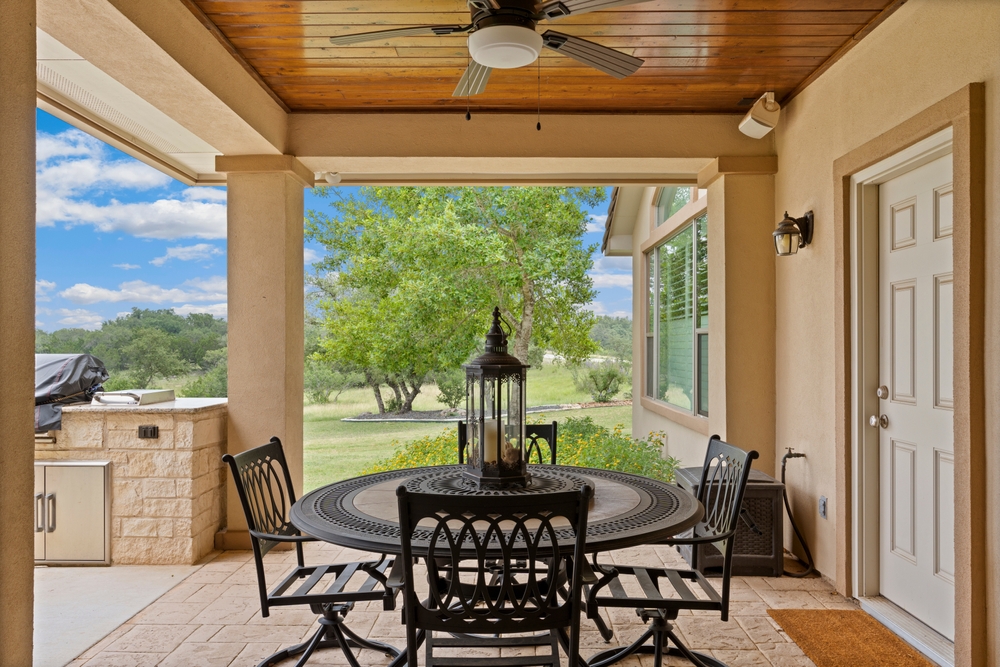
- Ceilings: Installing stained wood ceilings to bring warmth and texture to the space.
- Framing: Using modern black framing on windows and screen enclosures for a crisp, updated look.
- Hybrids: Building screened-in hybrid patios that offer the feel of a sunroom with the fresh air of a deck.
- Cooking: Designing full outdoor kitchens with low-maintenance finishes that wipe down easily.
- Screening: Especially with mosquitoes and other insects that come out during the summers in Missouri, this is a must for many homes.
Making Your Patio the Heart of Your Home
A great covered patio changes how you experience your home. When we design outdoor spaces with climate, comfort, and long-term functionality in mind, they become built for everything from humid summer evenings to crisp fall football weekends.
Let’s start designing. If you are ready to build a custom home with outdoor living built specifically for Missouri weather, working with our team early in the process ensures your patio feels fully integrated, functional, and built to last.

Frequently Asked Questions
Q: How deep should my covered patio be to block the sun?
A: We recommend a minimum depth of 12 to 14 feet for your covered patio. If your home faces west, we often suggest extending the roofline even further to block the harsh late-afternoon sun.
Q: Can I add a covered patio to my home later?
A: You certainly can, but it is often much more expensive and complex. Planning the patio during the initial build allows us to integrate the roofline, foundation, and utility lines seamlessly from day one.
Q: How do I keep bugs out of my covered patio?
A: Motorized retractable screens offer the best of both worlds. You can leave them up during breezy, bug-free afternoons, and lower them with the push of a button when the evening mosquitoes arrive.
Did you find this post helpful? Check out our post Linoleum vs. Vinyl Flooring.